Carrier AC Short Cycling in Glendale
Answer up front: A Carrier AC short cycling in Glendale, CA (91201-91208) -- starting and stopping every few minutes -- usually means an oversized unit, low refrigerant, a dirty coil or filter (code 44), or a failing capacitor or safety switch, with most fixes $129-$1,500 -- call (213) 772-7221 or book online. Glendale Carrier HVAC measures the real cause before naming a part.
Facts up front
- Short cycling wears the compressor and contactor and spikes the bill.
- Oversized condensers common in older Glendale Spanish-revival homes.
- Low refrigerant or a dirty coil (code 44) trips early shutoffs.
- A weak capacitor or tripping safety switch can mimic short cycling.
- A Manual J right-size at replacement settles oversizing permanently.
- Hours: Mon-Fri 7:30am-6:30pm, Sat 8am-4pm.
- Independent shop -- in-warranty units referred to a Carrier dealer first.
Why does my Carrier AC keep turning on and off?
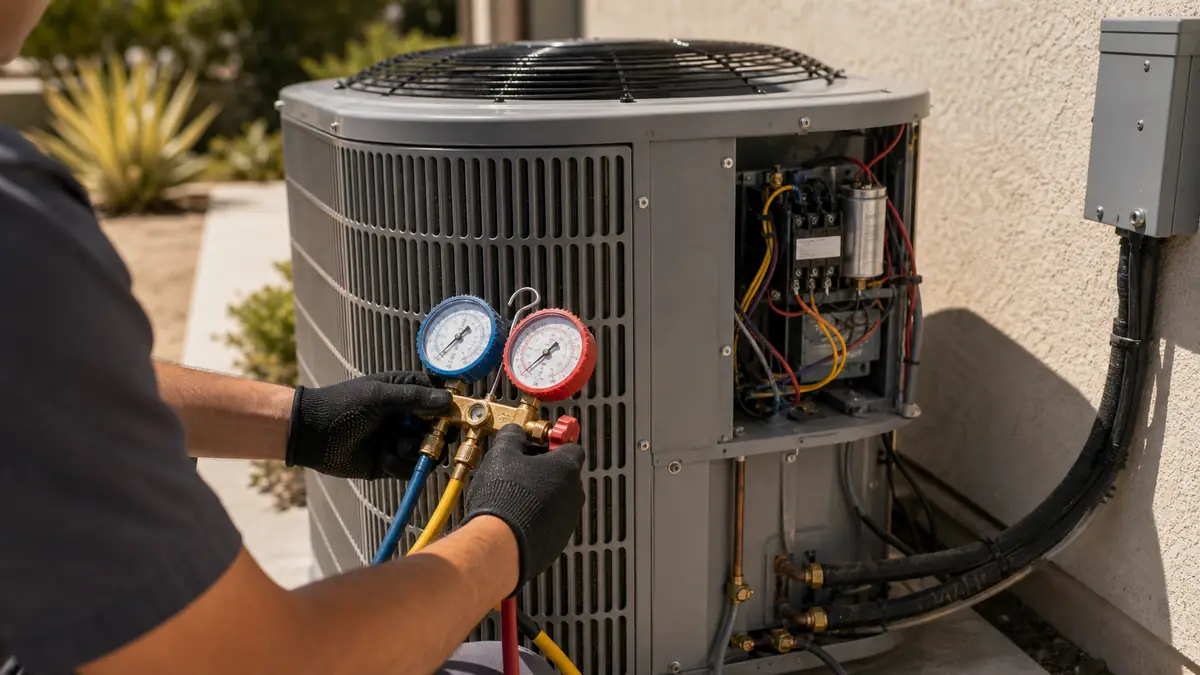
A handful of things cause short cycling, and the right fix hinges entirely on which one is at play. The cause most often missed in Glendale is an oversized unit: older Spanish Colonial revival and Craftsman homes commonly picked up a too-large condenser in a past swap, so it chills the thermostat room fast, meets the call, switches off, and kicks back on minutes later. Beyond sizing, low refrigerant from a leak trips the system on a low-pressure or freeze condition, a dirty coil or clogged filter (Carrier code 44) chokes airflow and overheats the unit, and a weak run capacitor or a tripping safety switch -- high-pressure cutout or condensate float -- forces early shutoffs. We measure pressures, airflow, and electrical values to separate these rather than guess.
| Pattern | Likely cause / first check | Cost lane |
|---|---|---|
| Cools fast then off, repeats | Oversized unit; right-size at replace | Replace ($5,000+) |
| Trips on freeze/low pressure | Low refrigerant; pressure-test for leak | $225-$1,500 |
| Overheats then restarts (code 44) | Dirty coil/filter; clean airflow | $129-$400 |
| Hard starts, electrical trips | Run capacitor or contactor | $150-$450 |
| Random shutoffs | Safety switch or thermostat fault | $129-$500 |
How do you tell oversizing from a refrigerant problem?
By the numbers. An oversized unit cycles cleanly -- it just runs too short because it overshoots the setpoint, with normal pressures and airflow. A refrigerant or airflow problem shows abnormal suction and head pressures, a cold or frosting coil, and often code 44 for restriction. We take refrigerant readings and a temperature split across the coil; that data tells us whether you have a sizing issue we address at the next Carrier AC installation or a charge/airflow fix we can do now via AC repair.
What is safe to check before you call?
A short list, and it can save a visit. Replace a clogged filter first -- choked airflow (Carrier code 44) is the cheapest cause of early shutoffs and the one a homeowner can fix. Pull the outdoor disconnect and, with the power off, clear leaves and clippings off the condenser coil and the few feet around it; a coil packed with foothill debris overheats and trips the unit. Check that no condensate float switch has tripped (water in the pan stops the call). Confirm the thermostat is not mounted in a sunbeam or over a supply register, which makes it satisfy too fast. Past that, stop: refrigerant pressures, capacitor microfarads, and the high-pressure safety are gauge-and-meter work. And do not keep letting an oversized or low-charge system hammer on and off -- every restart is the hardest moment for the compressor and contactor, so book it before a cheap fault becomes a compressor.
Why does short cycling matter for my Carrier system?
Startup is the toughest moment a compressor and contactor face, so a unit that cycles every few minutes wears those parts down fast and pushes your summer bill up while never drawing humidity out properly. Left alone, short cycling from low refrigerant or a dirty coil tends to snowball into a frozen coil and a full no-cool -- see AC not cooling. Catching it early is cheaper. The fault-code reference covers code 44 and the related sensor faults.
Common questions
What does short cycling mean on a Carrier AC?
Short cycling describes a compressor that fires up and shuts down every few minutes rather than holding steady cooling cycles. It chews through the compressor and contactor, drives your bill up, and never dehumidifies the way it should. Through a Glendale summer a healthy unit settles into longer runs; fast on/off tells you something is cutting the system off early.
Can an oversized Carrier AC cause short cycling?
Yes, and we see it a lot in Glendale. Older Spanish revival and Craftsman homes frequently got an oversized condenser dropped in during a past swap. It chills the thermostat area quickly, clicks off, then fires back up minutes on -- short cycling baked into the install. The genuine fix is right-sizing at the next replacement with a Manual J load calc.
Is short cycling a refrigerant problem?
It can be. Low refrigerant from a leak makes the system trip on a low-pressure or freeze condition, then restart once it equalizes -- a short-cycle pattern. A dirty coil or clogged filter (Carrier code 44) does the same by choking airflow. We measure pressures and airflow to tell an oversizing issue from a charge or airflow issue.
Could a bad capacitor make my Carrier AC short cycle?
A weak run capacitor can cause hard starts and trips that look like short cycling, and a failing thermostat or a tripping safety (high-pressure switch, float switch) will do it too. We check the electrical components and the safeties before assuming it is a sizing or refrigerant problem, since the cheap causes are worth ruling out first.