Carrier Furnace Not Heating in Glendale
Answer up front: A Carrier furnace not heating in Glendale, CA (91201-91208) usually has a dirty flame sensor, a weak hot-surface igniter, a pressure-switch fault, or a limit lockout -- stored as code 34, 31, or 13 on 59-series boards, and most fixes run $150-$700, so call (213) 772-7221 or book online. Glendale Carrier HVAC fixes the cause, not just the symptom.
Facts up front
- Top no-heat cause: dirty flame sensor or weak igniter (code 34/14), $150-$400.
- Pressure-switch fault (code 31): inducer or vent blockage, $200-$700.
- Limit lockout (codes 13/33): restricted airflow, check filter/blower.
- Rollout (code 26): heat-exchanger inspection required (safety).
- No-heat calls spike on Glendale's first cold nights after idle months.
- Hours: Mon-Fri 7:30am-6:30pm, Sat 8am-4pm.
- Independent shop -- in-warranty units referred to a Carrier dealer first.
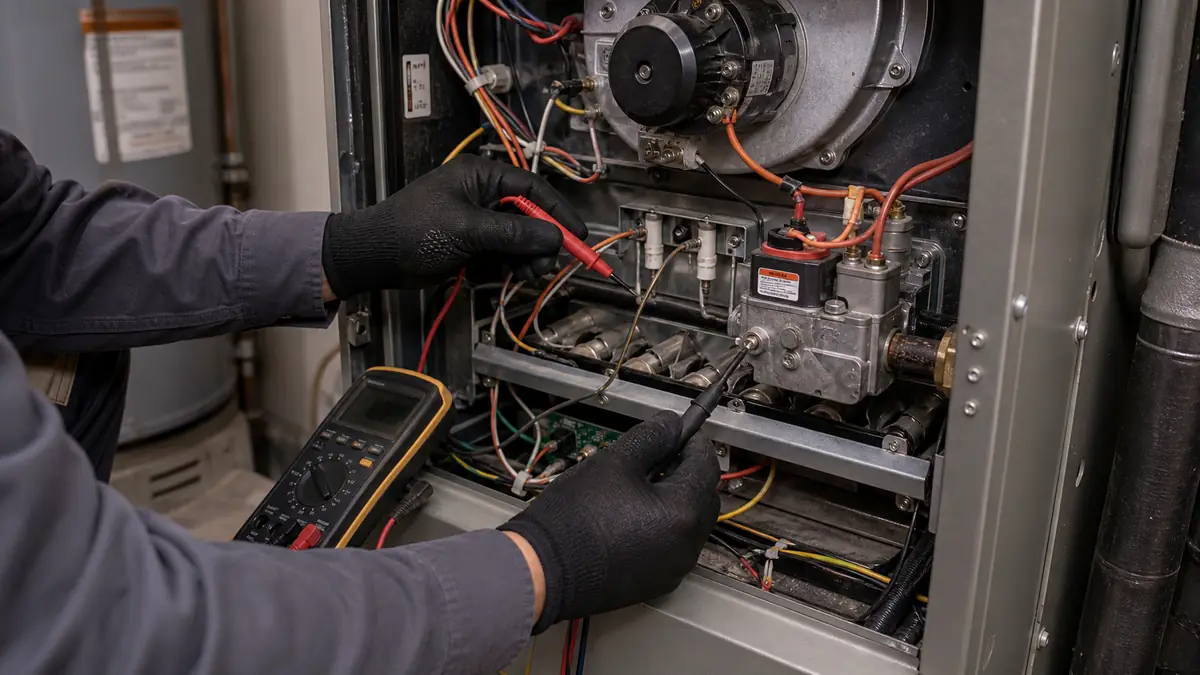
Why won't my Carrier furnace produce heat?
The most common no-heat pattern is a furnace that tries to light, runs a few seconds, then shuts the gas off and locks out -- usually a dirty flame sensor or a tired hot-surface igniter failing to prove flame. Carrier 59-series boards store this as code 34 (ignition proving) or 14 (hard lockout). The next tier is the pressure switch (code 31), which guards the combustion venting and trips when the inducer is weak or the flue is blocked. Limit lockouts (codes 13, 33) trace to restricted airflow from a clogged filter or a failing blower. Because Glendale's heating season is short, these parts gather dust during idle months and fail on the first real cold night.
| What you see / code | Likely cause / first check | Cost lane |
|---|---|---|
| Lights, drops out (code 34/14) | Flame sensor or hot-surface igniter | $150-$400 |
| No ignition (code 31) | Pressure switch, inducer, vent blockage | $200-$700 |
| Blower cold, limit lockout (13/33) | Restricted airflow; filter, blower | $150-$650 |
| Rollout lockout (code 26) | Inspect heat exchanger (safety) | $200-$900+ |
| Dead, no response (24/45) | Control fuse or board | $120-$2,000 |
How does a tech walk a Carrier no-heat call?
We follow the ignition sequence the furnace itself follows, because a failure shows up at a specific step. First we read the board: the amber LED flash count or, on an Infinity system, the touchscreen code and stored history tell us where the last cycle died. Then we watch a full call for heat. The inducer should spin up and close the pressure switch; if it does not, that is code 31 and we check the inducer motor, the pressure-switch hose, and the flue for a blockage before condemning the switch. Next the hot-surface igniter should glow and the gas valve open; a no-light points at the igniter or the valve. If it lights but drops out within seconds, we clean and test the flame sensor -- a microamp flame-rectification reading below spec is the classic code 34 cause, and a light sanding of an oxidized sensor often restores it. We verify the high-limit and rollout switches are closed and the heat exchanger looks sound; code 13 or 33 limit trips usually trace back to restricted airflow from a clogged filter or a weak blower. Only after that full cycle do we name the part.
The reason this order matters in Glendale is the short heating season. A furnace that sat idle from March to November fires on the first cold night with a dust-coated flame sensor and a tired igniter, so the flame-prove and ignition-lockout codes (34, 14) dominate our December calls -- and a $150-$400 sensor or igniter clears most of them.
What is safe for me to check first?
A few quick checks before you call: confirm the thermostat is set to heat and above room temperature, replace a clogged filter (a frequent cause of limit lockouts), make sure the furnace switch and breaker are on, and check that the gas is on. If the furnace lights and immediately drops out, that is the flame-sensor pattern and a job for us -- do not keep cycling it, since repeated lockouts stress the board. Anything involving the gas valve, inducer, or heat exchanger is not a DIY item.
When does no-heat mean replace, not repair?
A single ignition or pressure-switch repair on a sound furnace is routine -- see Carrier furnace repair. But a rollout lockout (code 26) on a furnace past 15 years means a heat-exchanger inspection, and a cracked exchanger is a safety replacement, not a patch. At that point we compare a 59-series Carrier furnace replacement with a heat-pump conversion that handles cooling too. The fault-code reference details every lockout code.
Common questions
My Carrier furnace blows cold air -- why?
If the blower runs but the air is cold, the burners are not staying lit. The furnace tries to ignite, fails to prove flame, and the board shuts the gas down for safety while the fan keeps moving air. On 59-series furnaces that often stores as code 34. The usual culprit is a dirty flame sensor or a weak hot-surface igniter -- both inexpensive fixes.
Why does my furnace only fail on the first cold night of the year?
Glendale winters are short, so the furnace sits idle for months and then gets asked to fire with a dust-coated flame sensor and a tired igniter. That is exactly when no-heat calls spike here. A pre-winter inspection of the ignition train heads off most first-cold-snap failures before they happen.
What does a Carrier furnace code 31 mean?
Code 31 is a pressure switch that did not close or that reopened during the cycle. It usually points to a failing inducer motor, a blocked flue or intake, or a cracked pressure-switch hose. Because it involves combustion venting, it is not a do-it-yourself item -- we verify the inducer and the vent path before replacing the switch.
Is a furnace that locks out on code 26 dangerous?
Code 26 is a rollout switch, and it means we stop and inspect the heat exchanger. A rollout indicates flame is escaping where it should not, which can come with a cracked heat exchanger that leaks combustion gases. We will red-tag an unsafe unit rather than reset it, and discuss a 59-series replacement or heat-pump conversion.